sixtine-coverage
Route coverage format (.rcov)
sixtine-coverage can merge route-level coverage with code coverage.
Try it directly in the bundled demo report: demo-report.html.
Route coverage UI
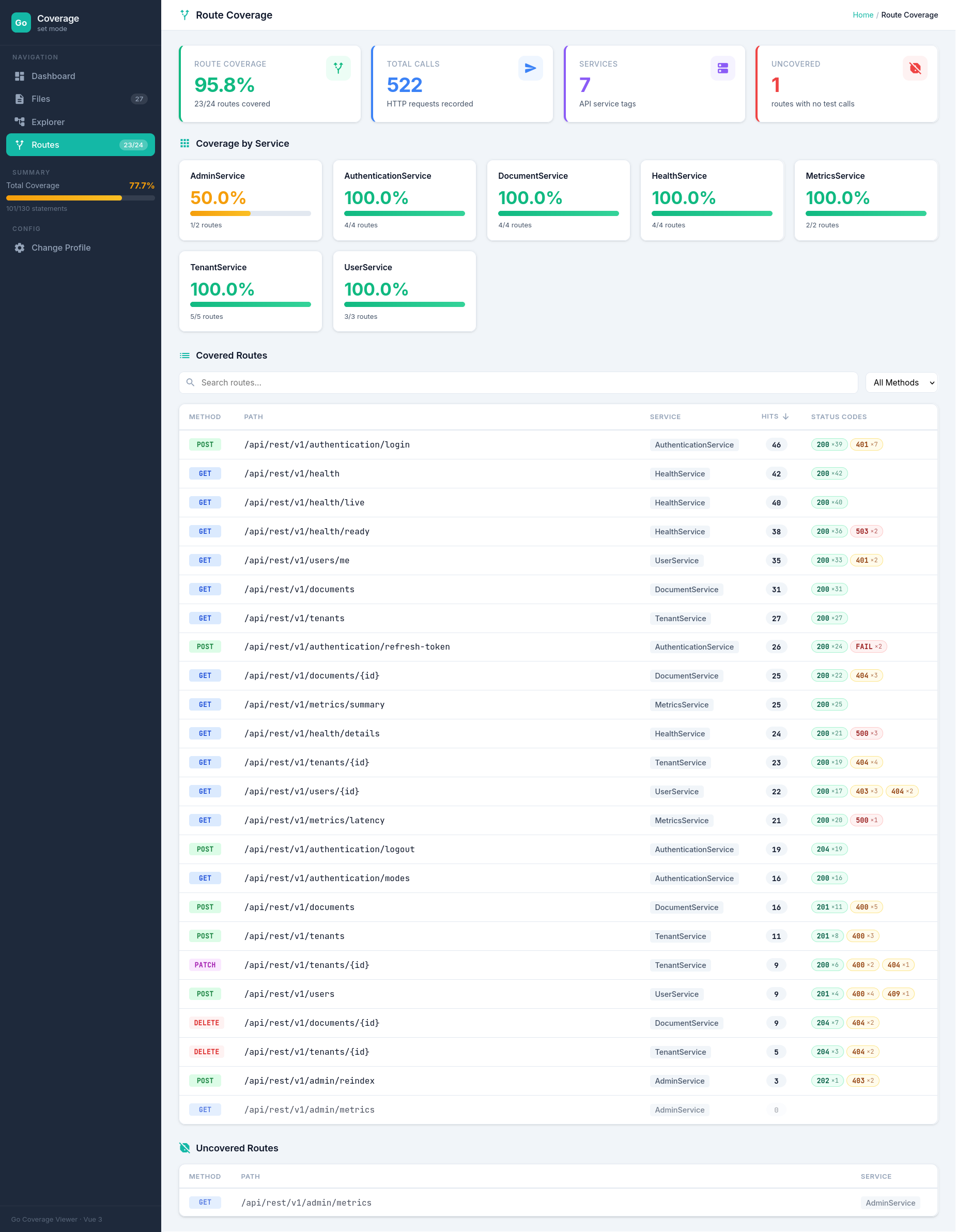
Example
mode: status
# AuthenticationService
GET /api/rest/v1/authentication/modes 200:1
POST /api/rest/v1/authentication/login 2 200:3
# TenantService
GET /api/rest/v1/tenants 200:4
GET /api/rest/v1/tenants/{id} 0
Rules
- Header:
mode: status - Service groups:
# ServiceName - Route line:
METHOD /path counts 0means no hits200:3means three responses with HTTP 2002 200:3means two unspecified + three with status 200-1:2means two connection failures
Route line grammar
<METHOD> <PATH> <TOKEN> [<TOKEN> ...]
Where each <TOKEN> is one of:
0<count>(unspecified responses)<status>:<count>
Examples:
GET /api/rest/v1/tenants 200:12POST /api/rest/v1/login 3 200:10 401:2GET /api/rest/v1/admin/metrics 0
Recommended conventions
- Group by bounded context (
# TenantService,# AuthenticationService) - Keep HTTP methods uppercase
- Use normalized route templates (
/tenants/{id}) - Include failure statuses to reveal blind spots
Notes on -1
-1:count is useful for transport or network failures where no HTTP status code was returned.
Validation checklist
- First non-empty line is
mode: status - Every route belongs to a service section
- No duplicate
METHOD + PATHwithin the same service (recommended) - Counts are non-negative integers